
Frameworks
recognized industry expert and
regularly gets featured in various events
as chairperson and keynote speaker
in Asia, Middle-East and Europe.
- Promise of a Business
- COMBINE: Buy-and-Build Framework
- SCALEUP
- ELITE Leadership
- CEO ELEVATE
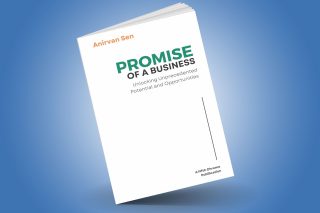 The PROMISE framework is a comprehensive, strategic model for building high-performance, future-ready businesses. It is designed to help organizations scale effectively—whether organically or through M&A—by aligning people, processes, leadership, and innovation to a clear strategic vision.PROMISE is an acronym that represents seven foundational pillars:
- P – People and Professional Development
Focuses on upskilling talent, leadership development, and building future-ready capabilities. It ensures the right people are in the right roles and continuously evolving with the business needs. - R – Rewards and Recognition
Aligns incentives with performance and culture. It ensures that both financial and non-financial rewards are structured to drive the right behaviors and outcomes. - O – Organization Structure and Leadership
Examines the design of the org structure and leadership layers to ensure clarity, agility, and accountability. It also focuses on leadership effectiveness and succession planning. - M – Management Operating System
Encompasses decision-making, KPIs, processes, performance reviews, and operating rituals. This system forms the backbone of execution discipline and consistency across the business. - I – Innovation and Critical Thinking
Encourages a culture of innovation, experimentation, and problem-solving. It challenges assumptions and helps businesses adapt through continuous reinvention. - S – Strategic Future and Strategic Capabilities
The starting point of the PROMISE journey. It defines the 3–5 year future state of the business and identifies the strategic capabilities needed to get there—be it market expansion, M&A, tech integration, or talent development. - E – Employee Experience
Focuses on creating an engaging, motivating, and fulfilling work environment that drives retention, productivity, and culture alignment.
How It Works
The starting point is always the Strategic Future (S)—what the business wants to become in 3–5 years. Every other element is then designed to support that vision. The PROMISE model is both diagnostic and prescriptive, used in strategic advisory, M&A integration, culture transformation, and scaling programs.
 The COMBINE Framework is a proprietary operating model designed specifically for buy-and-build strategies. It helps businesses integrate acquisitions rapidly, scale consistently, and operate as a single, unified platform rather than a patchwork of separate entities.
COMBINE is an acronym that stands for seven critical integration and scale levers:
- C – One Culture
Create a unified growth culture that aligns values, behaviors, rituals, and leadership tone across all entities. Focus on building shared identity, psychological safety, and integration of cultural norms post-acquisition. - O – One Organization and Leadership
Redesign the organization structure and leadership layers to ensure role clarity, synergy alignment, and cross-functional collaboration. Emphasize integration of leadership styles, decision rights, and accountability. - M – One Management System
Standardize the operating rhythm with common KPIs, dashboards, review rituals, processes, and tools. Establish a shared cadence for execution discipline, decision-making, and performance tracking across all entities. - B – One Brand and Marketing
Define a unified brand architecture, market positioning, and go-to-market strategy. Consolidate messaging, brand assets, and lead generation engines to avoid brand confusion and maximize market leverage. - I – One Information System and Infrastructure
Integrate systems such as ERP, CRM, HRIS, and communication platforms. Rationalize legacy tech, improve data visibility, and build scalable infrastructure to support integrated operations and analytics. - N – One Numbers and Financials
Move from fragmented P&Ls to a consolidated view of financial performance. Standardize accounting practices, budgets, reporting, and working capital management to drive financial control and investor readiness. - E – One Experience
Deliver a consistent and elevated experience to all stakeholders—employees, clients, partners, and investors. Ensure alignment across service quality, onboarding, communications, and support.
Strategic Purpose
The COMBINE Framework is not just about integration—it’s about building a repeatable, scalable operating system that unlocks exponential growth through acquisitions. It ensures that every new acquisition can be ‘plugged into the platform’ with speed, clarity, and minimal disruption—enabling the business to scale like a single organism.
It’s a shift from functional integration to operating system thinking—critical for mid-market firms aiming to grow from $10M to $200M+ through roll-ups and platform scaling.
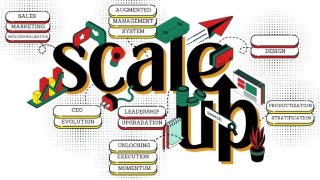 The SCALEUP Framework is a transformation model designed to help founder-led SMEs evolve into high-growth, professionally run businesses. It bridges the gap between hustle-driven growth and scalable, systems-driven execution—unlocking momentum, structure, and strategic leadership capacity.Each letter in SCALEUP represents a core pillar of scalable business transformation:
- S – Sales and Marketing Professionalization
Move from founder-led or ad-hoc sales to a structured, predictable, and team-driven sales engine. This includes defining ICPs, designing repeatable sales processes, and aligning marketing to growth goals—not vanity metrics. - C – CEO Evolution
Shift the founder from being the doer-in-chief to a strategic leader. This involves letting go, building strategic clarity, empowering others, and adopting the mindset and behaviors of a scale-up CEO. - A – Augmented Management System
Introduce professional governance, decision-making frameworks, KPIs, dashboards, and operating rhythms. Replace intuition-based management with clarity, structure, and accountability. - L – Leadership Upgradation
Evolve the leadership team from loyal executors to strategic contributors. This includes rethinking roles, upgrading capabilities, and building a team that can carry the business to the next stage. - E – Experience Design
Craft intentional, consistent, and differentiated experiences across employees, customers, and partners. Experience becomes a competitive edge, not just a byproduct of good intentions. - U – Unlocking Execution and Momentum
Set up a transformation engine using 90-day cycles. Assign a transformation lead, secure CEO commitment (time, energy, money), and create a rhythm of rapid experimentation and execution. - P – Productization and Stratification
Redesign your offerings into clear tiers and scalable packages. Eliminate customization traps and build a product portfolio aligned to pricing strategy, ICP needs, and growth targets.
Strategic Purpose
The SCALEUP Framework is ideal for companies stuck in the “messy middle”—past product-market fit but not yet fully systemized. It provides a clear roadmap to move from chaos to cadence, from founder-dependence to team-led growth, and from spike-driven revenue to scalable engines.
It’s especially effective for businesses preparing for rapid expansion, external funding, or becoming acquisition-ready.
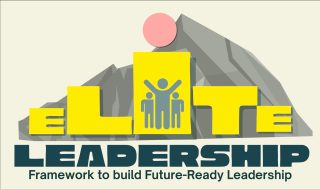 The ELITE Framework is a modern leadership model developed to help senior leaders and high-potential talent thrive in complexity, lead across boundaries, and future-proof their impact. It’s built around the leadership traits most critical for navigating today’s fast-changing business landscape—where digital disruption, global ambiguity, and stakeholder complexity are the new normal.Each letter in ELITE stands for a critical leadership capability:
- E – Expanded Strategic Thinking
Go beyond traditional strategic planning. Leaders must learn to think in multiple time horizons, adapt to emerging contexts, and integrate experience, data, foresight, and creativity into decisions. This includes scenario planning, systems thinking, and strategic imagination. - L – Lead Across Boundaries
Future leaders must transcend functional silos, organizational politics, and even industry norms. This trait emphasizes cross-functional collaboration, ecosystem partnerships, stakeholder orchestration, and the ability to influence without control. - I – Innovation Everywhere
Innovation is no longer confined to R&D. ELITE leaders embed innovation in how they think, lead, design processes, structure teams, and challenge norms. They foster a culture of experimentation, rapid learning, and bold change—not just idea generation. - T – Technology and Digital Fluency
Leaders don’t need to code—but they do need to understand, embrace, and lead with technology. From AI and automation to data and digital tools, fluency in tech enables smarter decisions, leaner execution, and greater customer responsiveness. - E – Execution and Experience Edge
ELITE leaders don’t just set strategy—they drive execution through disciplined focus and agile rituals. At the same time, they prioritize employee, customer, and stakeholder experience as a source of differentiation and long-term value.
Strategic Purpose
The ELITE Framework equips organizations to build next-generation leadership capability—fitting for scale-ups, corporates undergoing transformation, or companies preparing their top talent for succession.
It answers a pressing question for CHROs and CEOs alike:
“What does the next generation of leadership need to look like—and how do we build it now?”
Rather than focusing only on foundational skills like communication or stakeholder management, ELITE zeroes in on what’s emergent, cross-functional, and future-critical.
 The CEO ELEVATE Framework is a leadership transformation model designed to help scale-up CEOs lead with confidence, clarity, and capability—especially in buy-and-build environments. It’s built to help founders and early-stage CEOs evolve into scale-stage leaders capable of managing complexity, enabling execution, and preparing the business for external investment, market expansion, or exit.
Each letter in ELEVATE stands for a pivotal leadership pillar:
- E – Evolution of Thinking of CEO
Transition from operational management to strategic foresight. This includes letting go of day-to-day control, thinking in systems and scale, and focusing on building a business that can grow without the CEO at the center of every decision. - L – Right-Fit Leadership Team
Design leadership around phases of growth. This may include temporary, fractional, or project-based leadership roles aligned to the company’s maturity curve and future aspirations—rather than static org charts. - E – Execution Team
Build a high-performance execution layer that converts strategy into rapid action. This is the CEO’s “go-to” team for driving change, integrating acquisitions, and unlocking momentum. - V – Velocity to Market Expansion
Accelerate the business through bold moves—category creation, market entry, channel scale-up, and acquisitions. This pillar is about building momentum, not incremental growth. - A – Aligned Management System
Install a scalable operating system that balances agility with control. This includes governance, decision rights, KPIs, dashboards, performance reviews, and cadence rituals designed for scale. - T – Technology Fluency
Embed digital awareness and tech adoption across the business. The CEO doesn’t need to be technical but must champion the use of automation, AI, systems, and data to power exponential growth. - E – Experience Design
Architect meaningful, consistent experiences for employees, customers, partners, and investors. Experience becomes a strategic lever—tied to brand, retention, loyalty, and valuation.
Strategic Purpose
ELEVATE helps a CEO move from being a founder-operator to a scale-stage architect—especially important in businesses that are:
- Growing through M&A or platform scaling
- Preparing for PE investment or strategic exit
- Facing operational overload or growth complexity
It provides the leadership system that complements your COMBINE operating model and SCALEUP business system.

Anirvan Sen works at the intersection of strategy, leadership, operating models, and M&A. As the Founder and CEO of Fifth Chrome, he has created proprietary frameworks including PROMISE, COMBINE, SCALEUP, ELITE Leadership, and the Buy-and-Build Operating System to help founder-led, mid-market, and institutional-backed companies scale through complexity, particularly in M&A and buy-and-build environments.